Eurotunnel Pet Reception: travelling with pets on LeShuttle, documents, visa and step by step
On 23 September 2026 we drove a passenger and her cat from Paris CDG to West Hampstead, London, on the LeShuttle. This is what genuinely needs preparing, for the animal and for the humans, told from the Coquelles terminal with our own photographs.
The essentials in 30 seconds
- The animal: microchip fitted before the rabies vaccination, vaccination valid from day 21, at least 12 weeks old, original EU pet passport. Dogs only: tapeworm treatment 24 to 120 hours before arrival.
- The Pet Reception: a dedicated building at Coquelles, to be visited between 2 hours and 1 hour before your shuttle. You stay in the car; the agent scans the chip and hands you a "PETS" tag for the mirror.
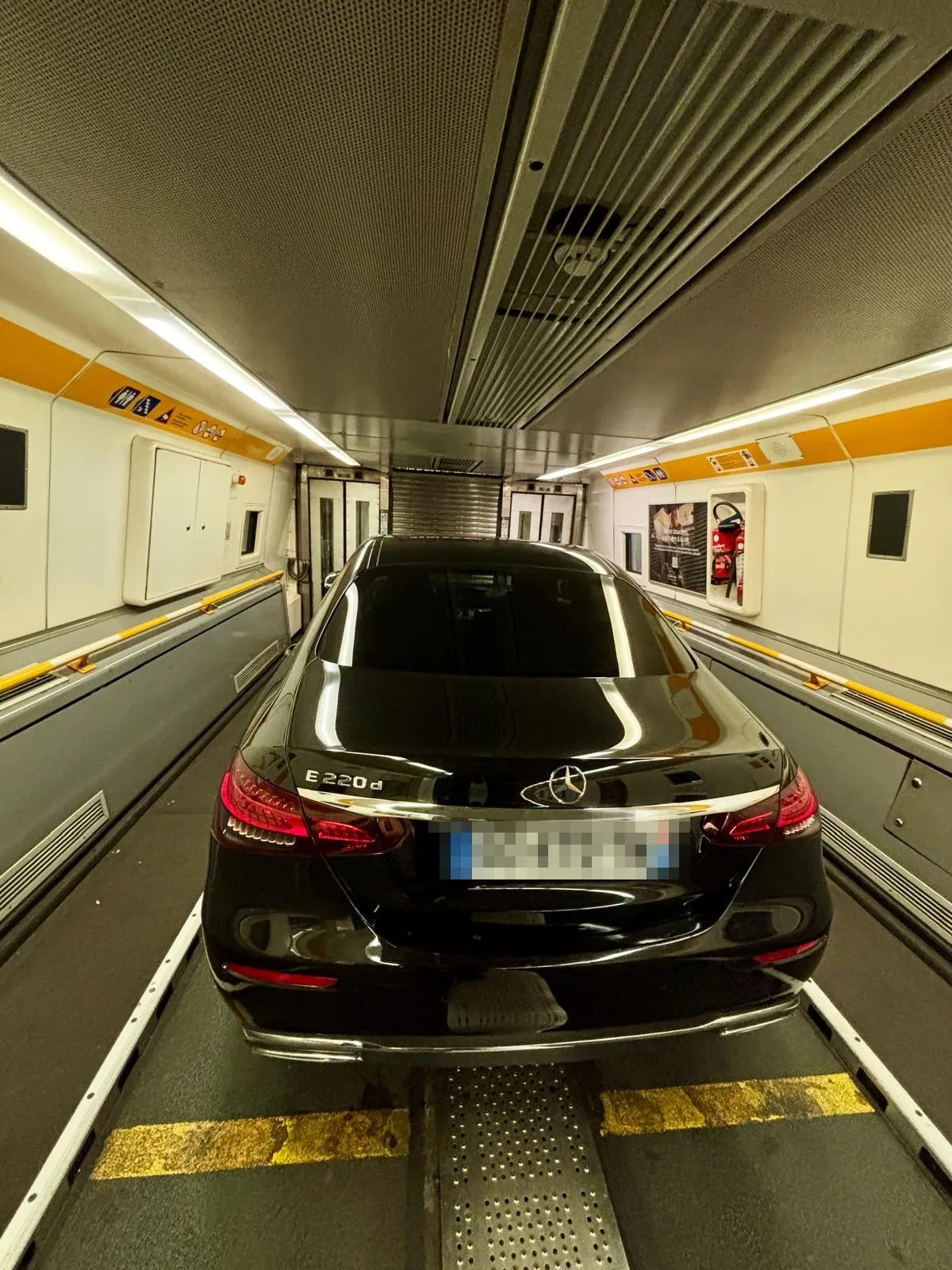
- The crossing: 35 minutes, everyone on board the car, pet included. No hold, no crate handed to a stranger.
- The humans: passport compulsory. EU citizens and other visa-free nationalities: ETA. Visa nationals: Standard Visitor visa, even with a French residence permit.
- Coming back: the animal's EU pet passport remains the reference document for re-entering France.
Rules, fees and processing times move: the facts below were checked on 18 September 2026 on gov.uk and leshuttle.com, then tested at the terminal. For your date, run the same check on those links.
Eurotunnel pet travel requirements: cat, dog, ferret
For an animal living in France or elsewhere in the European Union, the file comes down to four items, and the order matters.
- The microchip must have been implanted before the rabies vaccination. A vaccination given before the chip counts for nothing at the desk.
- The rabies vaccination is recognised from the 21st day after the injection. A jab the day before you leave will not pass.
- Age: the animal must be at least 12 weeks old.
- The EU pet passport, the original, issued and completed by a vet. Not a photocopy, not a photo on your phone.
Dogs have one extra step: a treatment against Echinococcus (tapeworm) administered by a vet between 24 and 120 hours, 1 to 5 days, before arrival in Great Britain, with date, time and stamp recorded in the passport. The window is short: a treatment done "last week" no longer counts. Cats and ferrets are exempt: no worming treatment is asked for.
Two side rules: a maximum of five animals per traveller, and if the animal belongs to someone else, a signed written authorisation from the owner. The current detail is on gov.uk for the British side and on agriculture.gouv.fr for the French pet passport.
Pets arriving from an unlisted country: the three-month trap
A cat that landed at CDG a few days earlier from Abidjan, Dakar or Bangkok is not "a cat in France" as far as the UK border is concerned: it comes from an unlisted country, and a different procedure applies.
- A rabies antibody titration test (a blood test measuring antibodies), taken at least 30 days after the vaccination.
- Then a three-month wait after that blood sample before the animal can enter Great Britain.
- Plus an official health certificate less than 10 days old at the time of crossing.
Without all three, the animal is turned away at the Pet Reception: the car does not board the shuttle and the journey ends in Calais. If your pet has recently lived outside the EU, see your vet before fixing a date, and check the country list on gov.uk.
The Coquelles Pet Reception, step by step
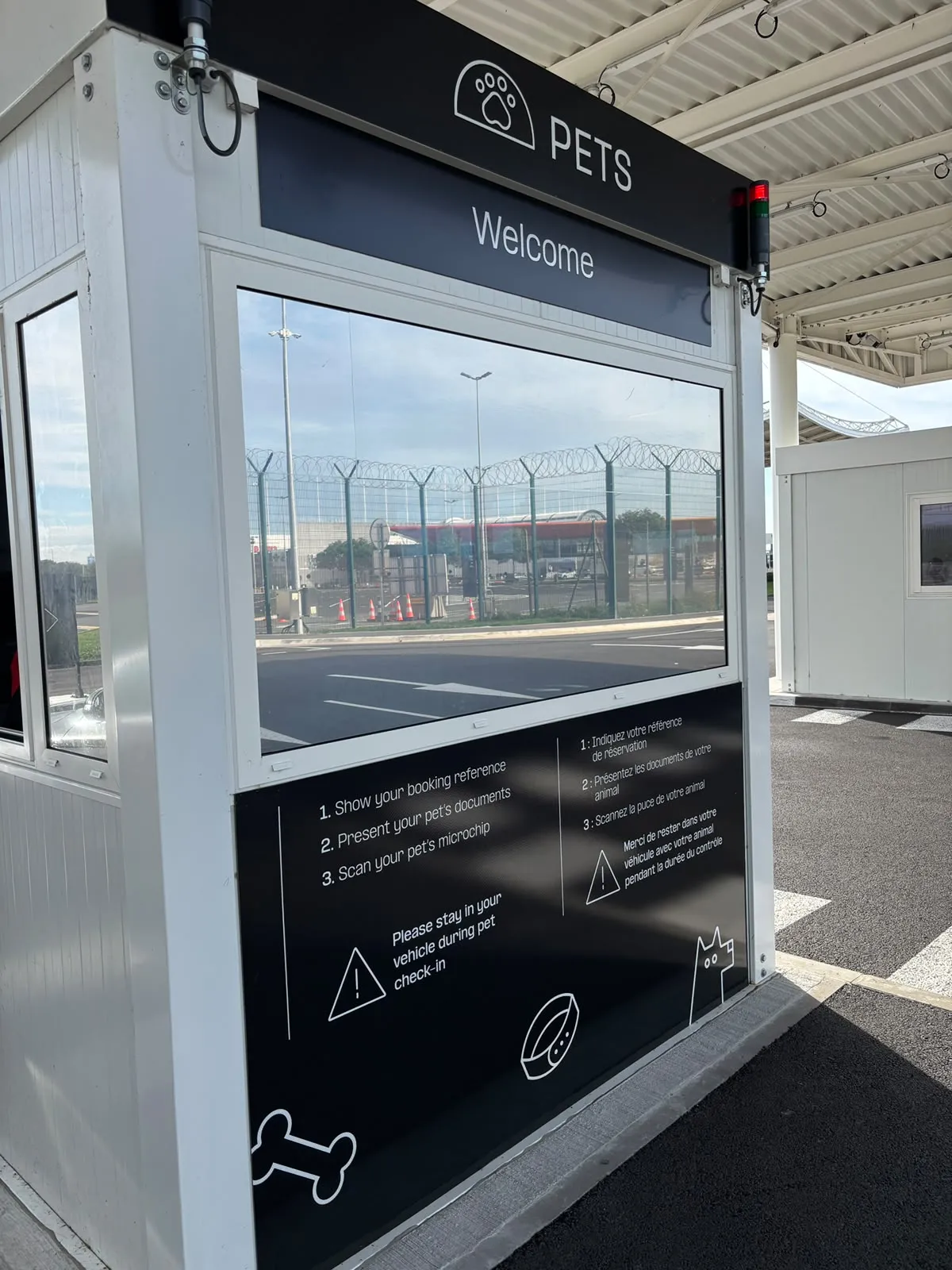
LeShuttle passenger terminal, junction 42b of the A16. The Pet Reception is a separate building, signposted from the entrance to the site, and you go there before the check-in booths and border controls. Here is how our 23 September passage went, for the 12:16 shuttle.
- The time window. Pet check-in opens 2 hours before departure and closes 1 hour before. For us: 10:16 to 11:16. Earlier gains nothing; later means missing the shuttle.
- You stay in the car. The desk is at window height: the chauffeur hands over the booking reference, then the animal's passport.
- Chip scan. The agent runs the reader over the animal through the open door and matches the number with the passport. For a cat, the carrier stays on the back seat; you just open the grille.
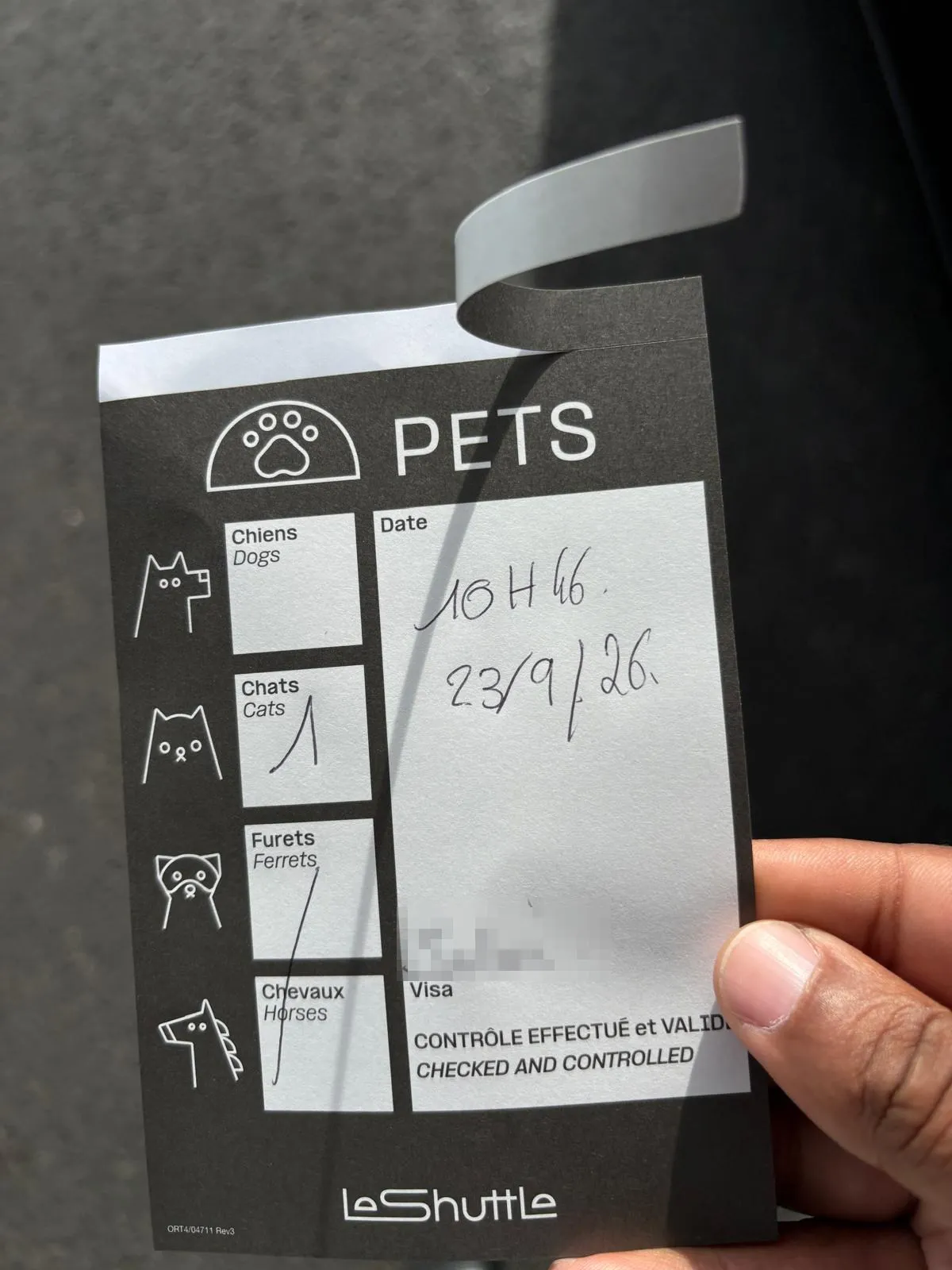
- The "PETS" tag. Documents cleared, the agent stamps and hands over a card tag for the rear-view mirror: number of animals, time, date, initials. Ours reads "Cats: 1 – 10:46 – 23/9/26". This is what every later checkpoint looks for.
- Then the normal circuit: booths, French exit control then UK entry control, still from the car, the boarding lane, and 35 minutes under the Channel with your pet beside you.
A dog exercise area is signposted at the terminal, worth using before boarding, because inside the train nobody gets out until Folkestone. On arrival you drive onto the M20; London is roughly 1 hour 45 away.
Documents for the humans: passport, ETA or visa
People prepare the animal's file so carefully that they sometimes forget their own. Yet this is where a surprise costs the most: it is fixed in weeks, not hours.
A passport, for everyone
A national identity card no longer gets you into the United Kingdom: every occupant of the car, chauffeur included, presents a valid passport. Eurotunnel also requires the passport details of all occupants (Advance Passenger Information) 24 hours before departure; we submit them for you, hence the passport copy we ask for when you book.
The ETA for EU citizens and visa-free nationalities
EU citizens and other visa-exempt nationalities must obtain an ETA (Electronic Travel Authorisation) before travelling. You apply through the "UK ETA" app or on gov.uk/eta; it costs 16 GBP, usually arrives within three working days and is valid for two years with multiple entries. Irish citizens are exempt. For the current fee and processing time, trust the official link, nothing else.
The Standard Visitor visa for visa nationals
Ivorian, Burkinabe, or a passport from one of the many African and Asian countries that require a visa? The ETA is closed to you: you need a Standard Visitor visa, applied for in advance, allowing about three weeks. A French residence permit, even a multi-year one, does not exempt you from the visa. The UK looks at the nationality on your passport, not the country you live in, the misunderstanding we meet most often at the quote stage.
To settle the question in two minutes: gov.uk/check-uk-visa answers by nationality and purpose of visit. We run it before confirming any Paris to London journey.
The return to France
In the other direction, your animal's EU pet passport remains the reference document: with its rabies vaccination up to date, it is what allows the animal back into the Union. Declare the pet when booking the return crossing just as you did outbound, passport to hand. For the exact conditions on your date, rely on agriculture.gouv.fr and leshuttle.com rather than an article.
Checklist: 30 days, 7 days, the day before, the day itself
- 30 days out (or more): microchip, rabies vaccination (day 21) and EU pet passport confirmed by the vet; your own status checked on gov.uk/check-uk-visa; visa application started if needed; unlisted country: titration test, then three months.
- 7 days out: ETA applied for by every traveller entitled to one; shuttle confirmed with the pet declared; the dog's vet appointment booked inside the 24 to 120-hour window.
- The day before: passport details of all occupants sent (API); pet passport, passports, ETA or visa, owner's authorisation gathered; carrier, water, litter or lead ready.
- The day itself: A16 junction 42b, Pet Reception between 2 hours and 1 hour before the shuttle, tag on the mirror, controls and boarding without leaving the car.
Coquelles, 23 September 2026
Frequently asked questions
Can you take cats on the Eurotunnel?
Yes. Cats, dogs and ferrets travel inside the car on the LeShuttle train, provided they are declared when the crossing is booked and checked at the Pet Reception at the Coquelles (Calais) terminal before border control. A cat needs a microchip, a rabies vaccination at least 21 days old and its original EU pet passport.
Does my dog need a tapeworm treatment before the Eurotunnel?
Yes, dogs only: a treatment against Echinococcus (tapeworm) given by a vet between 24 and 120 hours before arriving in Great Britain, dated and stamped in the passport. No worming treatment is required for cats or ferrets.
How long before the shuttle do I need to be at the Pet Reception?
Between 2 hours and 1 hour before your shuttle departs; pet check-in closes one hour before departure. On 23 September 2026, for a 12:16 shuttle, our window ran from 10:16 to 11:16 and the check was stamped at 10:46.
Does the cat stay in the car during the crossing?
Yes. The Pet Reception check is done without leaving the vehicle, and during the 35-minute crossing everyone stays in the car, pet included. Your animal never changes hands or cabin between Paris and London.
I am Ivorian with a French residence permit. Which visa do I need?
A UK Standard Visitor visa, applied for in advance (allow about three weeks). A French residence permit does not exempt you: the UK looks at the nationality of your passport, not where you live. The ETA is not open to visa nationals. Check your own case on gov.uk/check-uk-visa.
Does the chauffeur also need an ETA?
Yes. The chauffeur enters the UK like any traveller, with a valid passport and ETA. Our chauffeurs assigned to Paris–London journeys hold one, and their passport details are submitted to Eurotunnel with yours 24 hours before departure (Advance Passenger Information).
Does the Eurostar accept pets?
No, except assistance dogs. By air, animals travel in the hold or as cargo. A car on LeShuttle is the only way your cat or dog stays with you in the cabin from door to door.
How much does it cost to take a pet through the Eurotunnel?
LeShuttle charges a supplement per animal, declared when the crossing is booked; the current amount is on leshuttle.com. When you travel with us, that supplement is built into your quote: the price you are given covers the chauffeur, the crossing and your pet's passage.
Your pet stays with you, we handle the rest
Pet passport checked before departure, Pet Reception built into the timing, LeShuttle supplement included in the quote. Paris to London from 1549€ one way, from CDG from 1300€. From CDG, the €1,300 Business Class fare applies when booked at least three weeks ahead, LeShuttle crossing included; under three weeks, a supplement may apply depending on LeShuttle availability at the requested time.
Request a quote with your pet ↗