Coronation city and capital of Champagne
Reims wears two crowns. For over a thousand years its soaring Gothic cathedral, Notre-Dame de Reims, was the setting for the coronation of the kings of France — some thirty of them, from the Middle Ages to 1825 — and Joan of Arc stood beside Charles VII here in 1429. A UNESCO World Heritage site alongside the neighbouring Palace of Tau, the cathedral is celebrated for its statuary and its Marc Chagall stained glass. Beneath the city lies its other treasure: kilometres of chalk cellars, or crayères, where the great Champagne houses age their bottles in cool, constant darkness. Combine the culture and the cellars with a flexible hourly chauffeur service to move at your own pace.
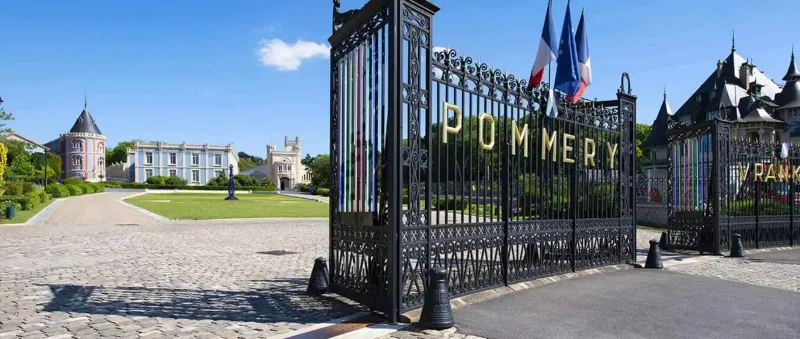
The famous names — Taittinger, Veuve Clicquot, Pommery, Mumm and others — offer guided visits and tastings that are best reserved in advance, and many sit just minutes apart within the city. Since the whole point of a tasting day is that no one has to drive, a private chauffeur to Reims is the natural choice: you travel the roughly 1h45 from Paris in comfort, are dropped at each cellar door, and return home safely in the evening. Add nearby Épernay and its Avenue de Champagne for a fuller day among the vineyards.
What to see in Reims in a day
- Notre-Dame de Reims. The coronation cathedral: the west front and its Smiling Angel, the gallery of kings, the Chagall windows in the axial chapel. Entry is free. Tower visits run in season, on separate tickets.
- Palais du Tau. The former archbishops' palace next door, where kings stayed before their coronation. It has been closed for a major renovation and is due to reopen as a museum of the coronations, announced for winter 2026 to 2027. Check its official website before you plan around it.
- Saint-Remi basilica. Romanesque and Gothic, built around the tomb of the bishop who baptised Clovis. Quieter than the cathedral, and part of the same UNESCO listing.
- Porte de Mars. A Roman triumphal arch from the 3rd century, on the north side of the centre.
- Museum of the Surrender. The map room where the German surrender was signed on 7 May 1945.
- The Art Deco centre. Reims was rebuilt after the First World War. The Carnegie library and the Boulingrin market hall are the best-known examples.
- Pink biscuits. The biscuit rose de Reims, made since the 18th century and meant to be dipped in champagne. Easy to bring home.
Opening days vary by site and season. Tell us which ones matter to you and we order the stops to match.